

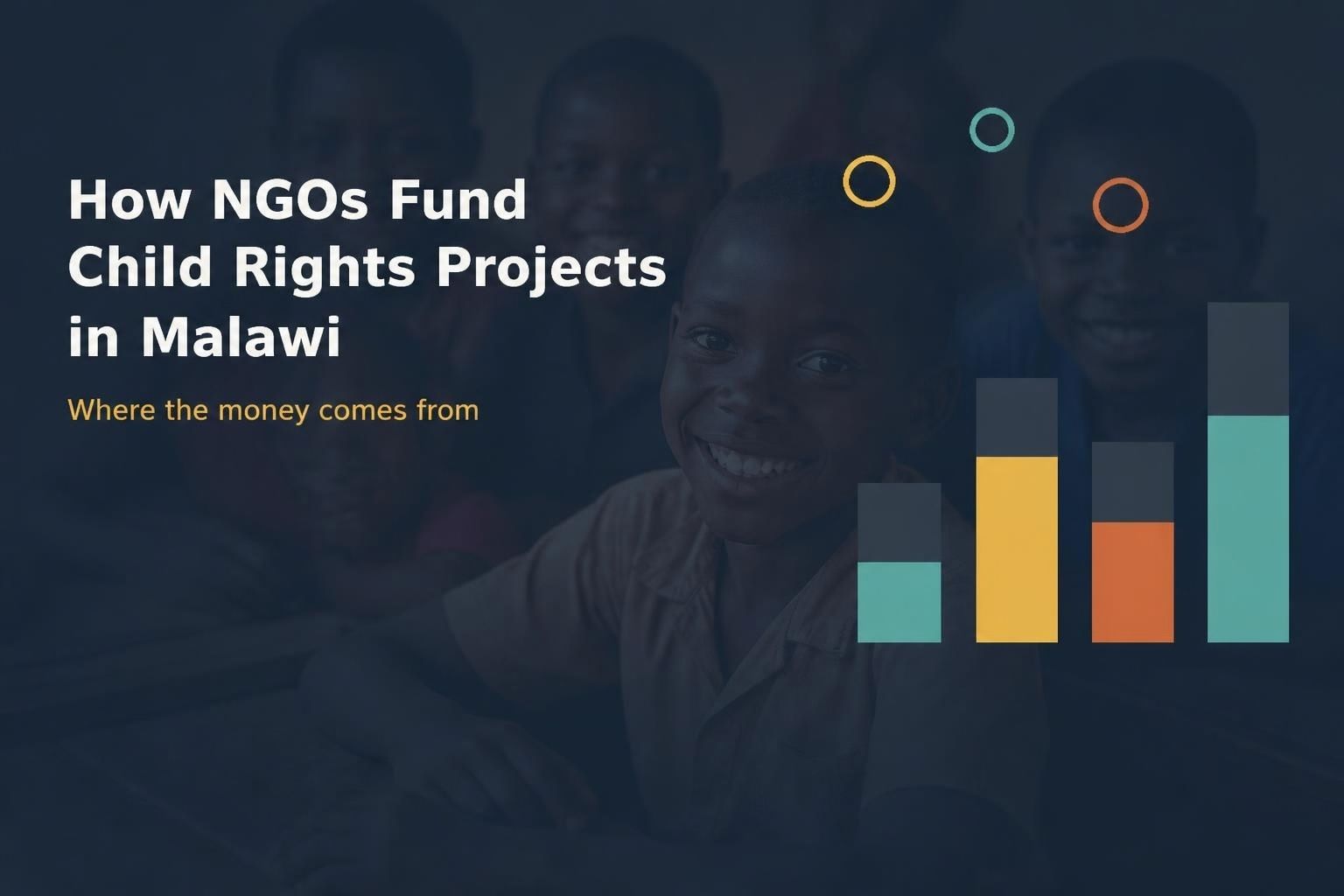
Running a child rights project takes more than good intentions. It takes money, and often from more than one place. This article looks at how child rights funding in Malawi actually works.
Quick Answer: How Child Rights Funding in Malawi Works
Child rights funding in Malawi comes from bilateral donors, UN agencies, foundations, crowdfunding platforms, and individual donors. Most NGOs, including CRIDOC, combine several of these sources rather than relying on just one. Small, local NGOs often face more hurdles securing funds than large international ones.
Where Child Rights Funding in Malawi Comes From
Large-scale child rights funding in Malawi often comes from bilateral donors and UN agencies. Earlier articles in this series show USAID funding school libraries, UNICEF and WHO funding health and protection work, and the EU and other governments backing wider development programmes.
Foundations and grant schemes are another source. Book Aid International offers small grants for community reading projects, while platforms such as GlobalGiving let individual donors fund specific, vetted projects directly. Alliances such as the Malawi Health Equity Network, with over 95 member organisations, also pool resources and coordinate funding across a wider network.
How CRIDOC Approaches Child Rights Funding in Malawi
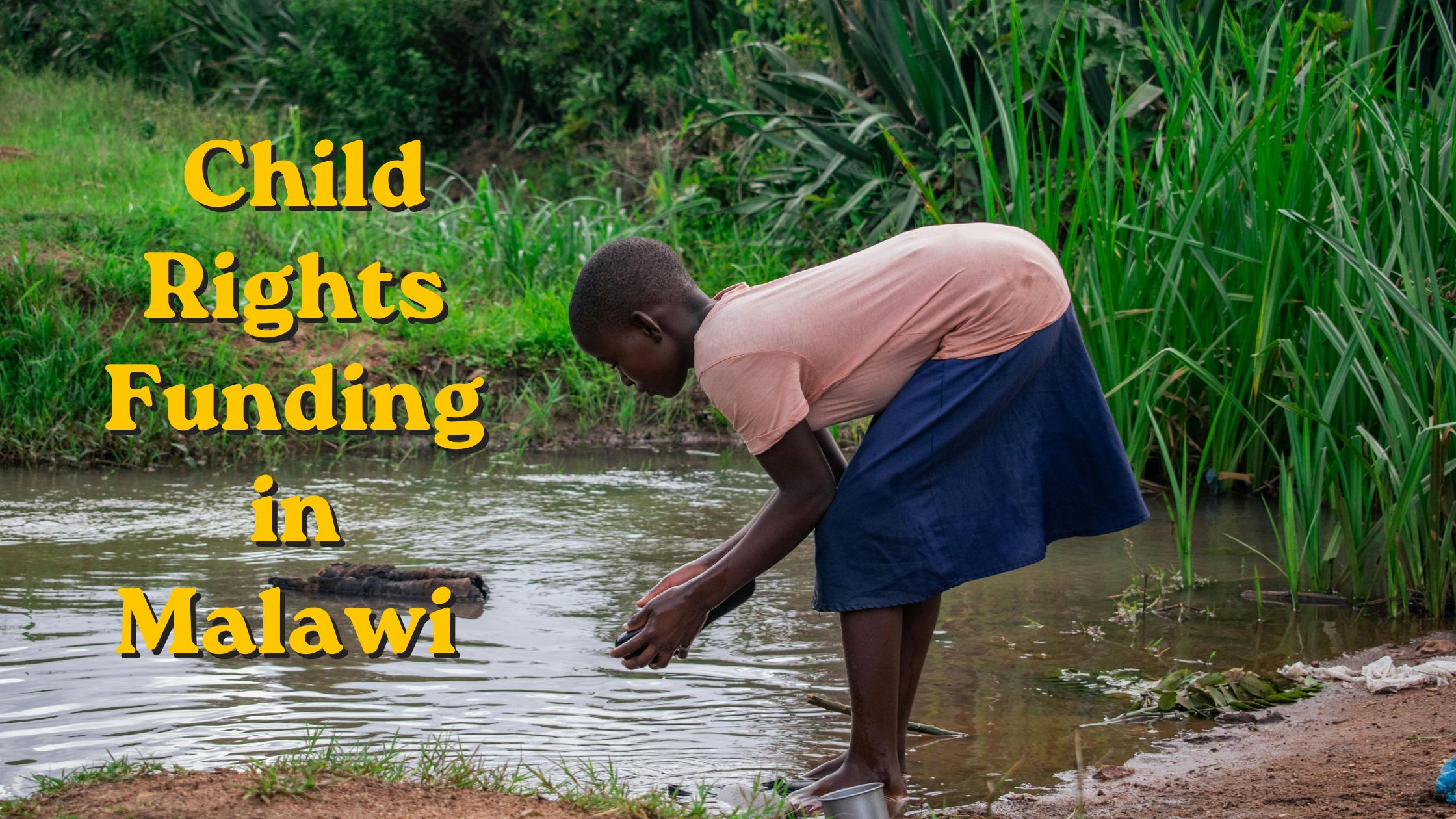
CRIDOC’s own model reflects this mix. It accepts online gifts through a donation partner, direct bank transfers, and in-kind items such as books, laptops and solar equipment. Rather than chasing only large grants, CRIDOC’s approach to child rights funding in Malawi starts small: one shared post, one book, one hour, then more as support grows. Read more on the CRIDOC donation page.
The Real Challenges Behind Child Rights Funding in Malawi
Securing child rights funding in Malawi is not simple, especially for smaller, local NGOs. A peer-reviewed study on small NGOs in rural Malawi found that funding has become more competitive since 2000, while resources have shrunk.
The same study found that donors often ask for data-driven evidence, yet local statistics in Malawi can be outdated or incomplete. Funds are also often ring-fenced, so NGOs cannot redirect money when conditions on the ground change.
What Helps Small Child Rights NGOs Secure Funding in Malawi
Researchers studying this problem recommend that donors visit projects directly, accept photo and video evidence alongside formal data, and stay flexible on reporting rules. For NGOs seeking child rights funding in Malawi, this means:
- Building direct relationships with donors, not just submitting written applications.
- Keeping clear, honest records, even when official statistics are patchy.
- Diversifying funding sources instead of relying on one large donor.
- Telling real stories and sharing genuine evidence of impact.
How You Can Support Child Rights Funding in Malawi
Individual donors play a real part in child rights funding in Malawi, alongside big institutions. You can:
- Give directly to a registered organisation, such as CRIDOC.
- Support a project on a platform such as GlobalGiving.
- Share verified projects with your own network to widen their reach.
Why Child Rights Funding Matters
Without reliable funding towards child rights programming in Malawi, school libraries stay empty, health outreach stalls, and fewer children are reached. Funding is not a side issue. It decides what is actually possible.
CRIDOC works to secure sustainable support for its own child rights work. Visit the CRIDOC homepage or read more on the About CRIDOC page to see how the organisation is funded and where it is headed next.
Strong funding, used well, is what turns good ideas into lasting change for children.

Leave a Reply